Stochastic Gradient Descent
The Math Behind ChatGPT!
Guest Speaker - Griffin Rutherford - MS Computer Science - Mountain Runner
This topic is normally only taught at the master's degree level. But I'm sure you can learn it!
Click and drag to rotate the paraboloid!
Yes! The world is messy and we can't just plug stuff into equations. As we have a bunch of data, we can't rely on the quadratic formula, completing the square, etc. I mean it would be insane to solve quartic equations by hand with this nightmare formula:
So what in the world do we do? We use computers!

Remember the concept of local minima/maxima and how we talked about slope? Those concepts all exist in 3D too.
So how do you think a computer can find the local minimum of a function if all we know is the input, output, and slope of where we are "standing"? Hint: Imagine you are walking in the paraboloid from the last page trying to find the very bottom.
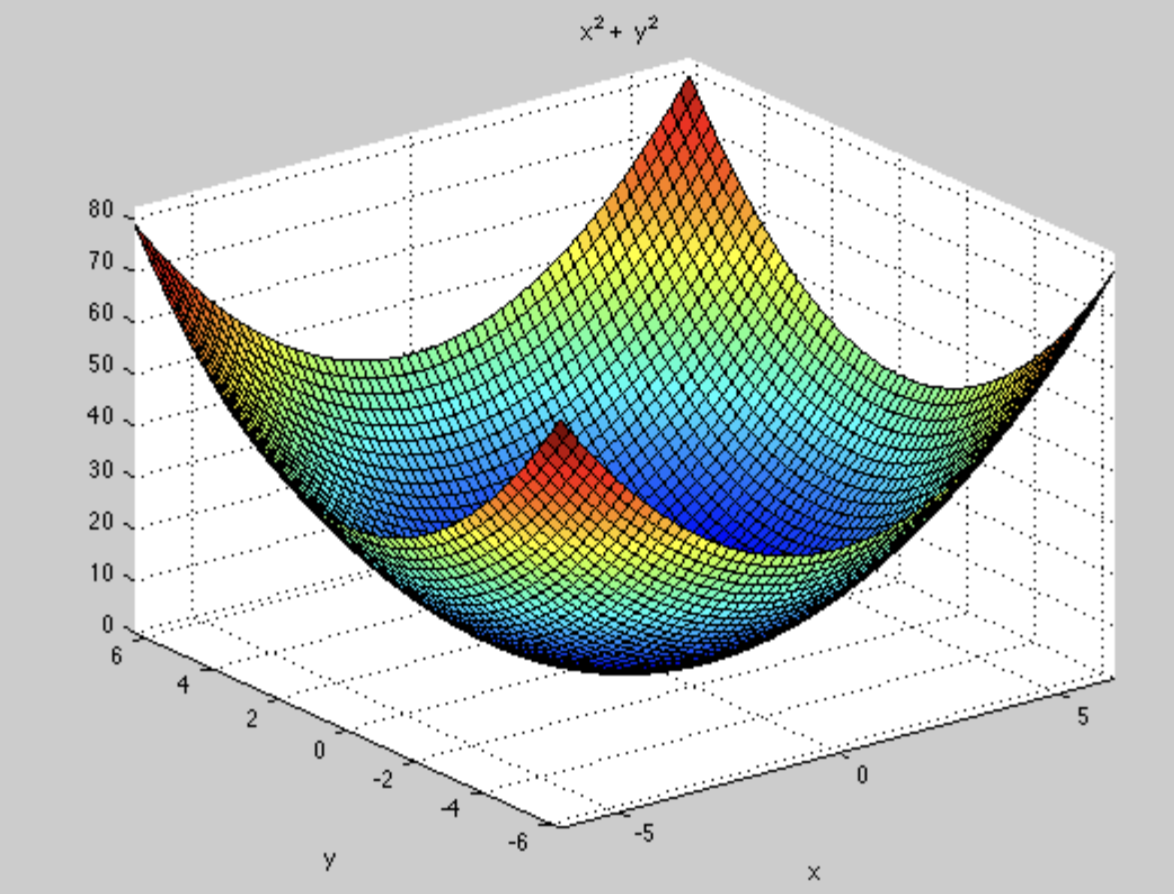
Spoiler for Q10: Computers can think like someone standing at the edge of a paraboloid, and make small steps downward until it knows the slope is flat. Remember that line we drew through the vertex of the parabola from Q4? Computers can figure that out, but in 3D too.
Computers really just make a bunch of educated guesses until it gets close enough to the result we want: the lowest point of the paraboloid.
This is the concept of Gradient Descent, the foundational reason why ChatGPT works!!
We have two holes. Think of the deepest hole as the global minimum and the other hole is a local minimum.
Let's say you could control the bowl with your hands and you want as many marbles as possible to end up in the deeper hole. You are blindfolded once again, so you can't tilt the bowl in the direction you know has the deeper hole.
What could you do to try to get the most marbles in the deepest hole after the marbles are dropped? Could anything be done?
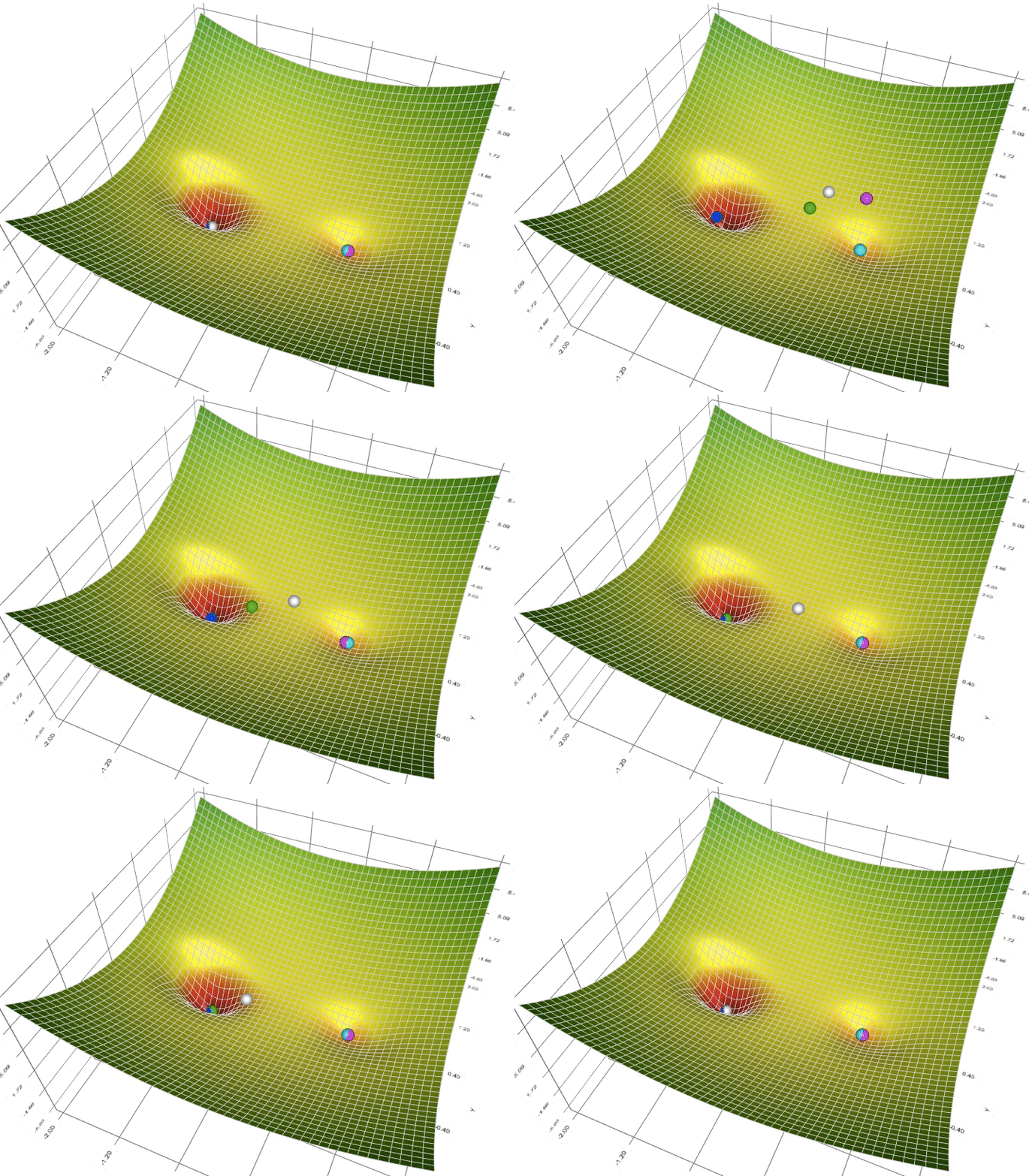
You just learned the concept of Stochastic Gradient Descent! This concept is not normally taught until 500-level graduate math classes 😱!
Stochastic is a fancy word for random.
To summarize, adding a bit of random "shakiness" helps computers better approximate to the best "local minimum" compared to going straight down.
Some shakiness is good, but too much causes the marbles to fall out, so we need just the right amount.
In the world of AI, this "shakiness" is referred to as "noise" or "temperature".
Instead of marbles in weird bowl holes, instead picture the depth of the hole as reducing pollution, saving resources, etc.
You think that’s crazy? It’s about to get nuts.
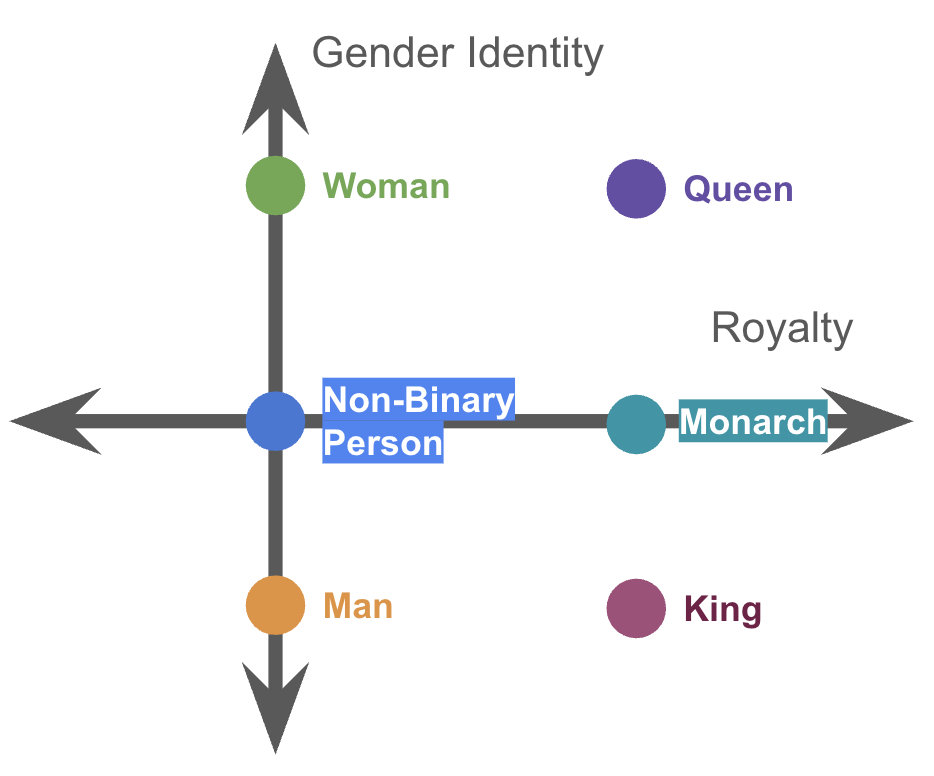
In this first example, ChatGPT stores the concept of “Royalty” on the x-axis and “Gender Identity” on the y-axis.
In this second example, ChatGPT stores the concept of “Activity Intensity” on the x-axis and “Temperature” on the y-axis.
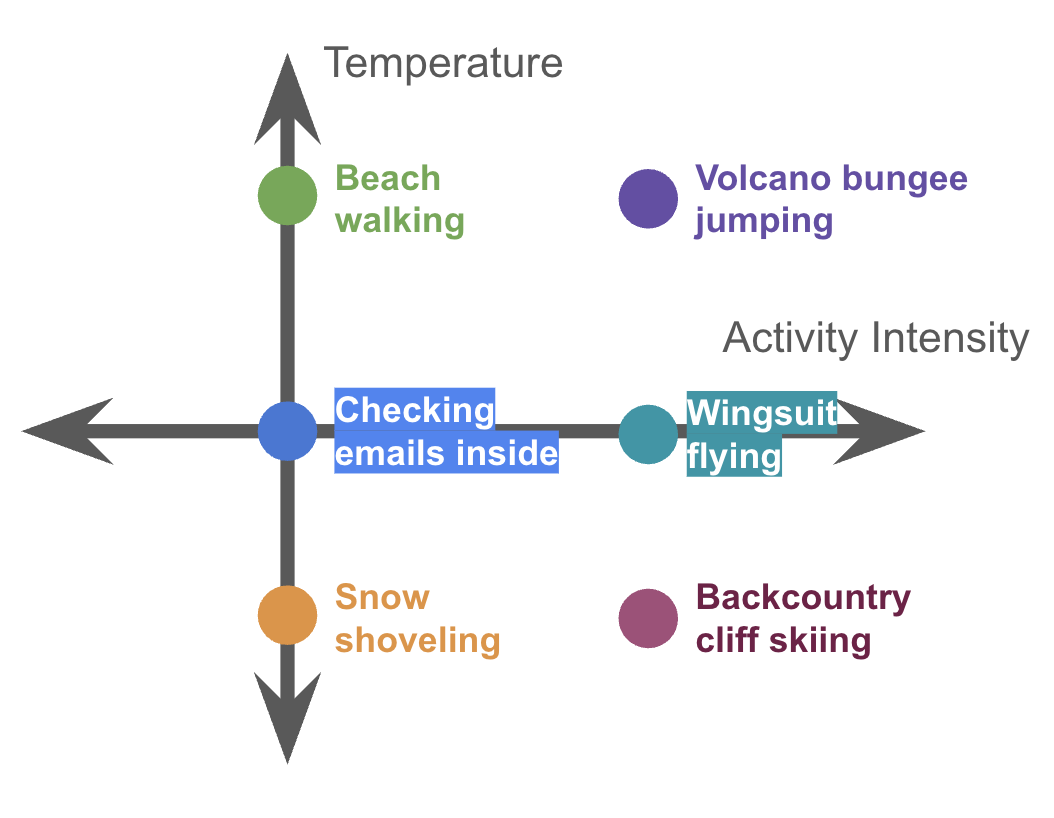
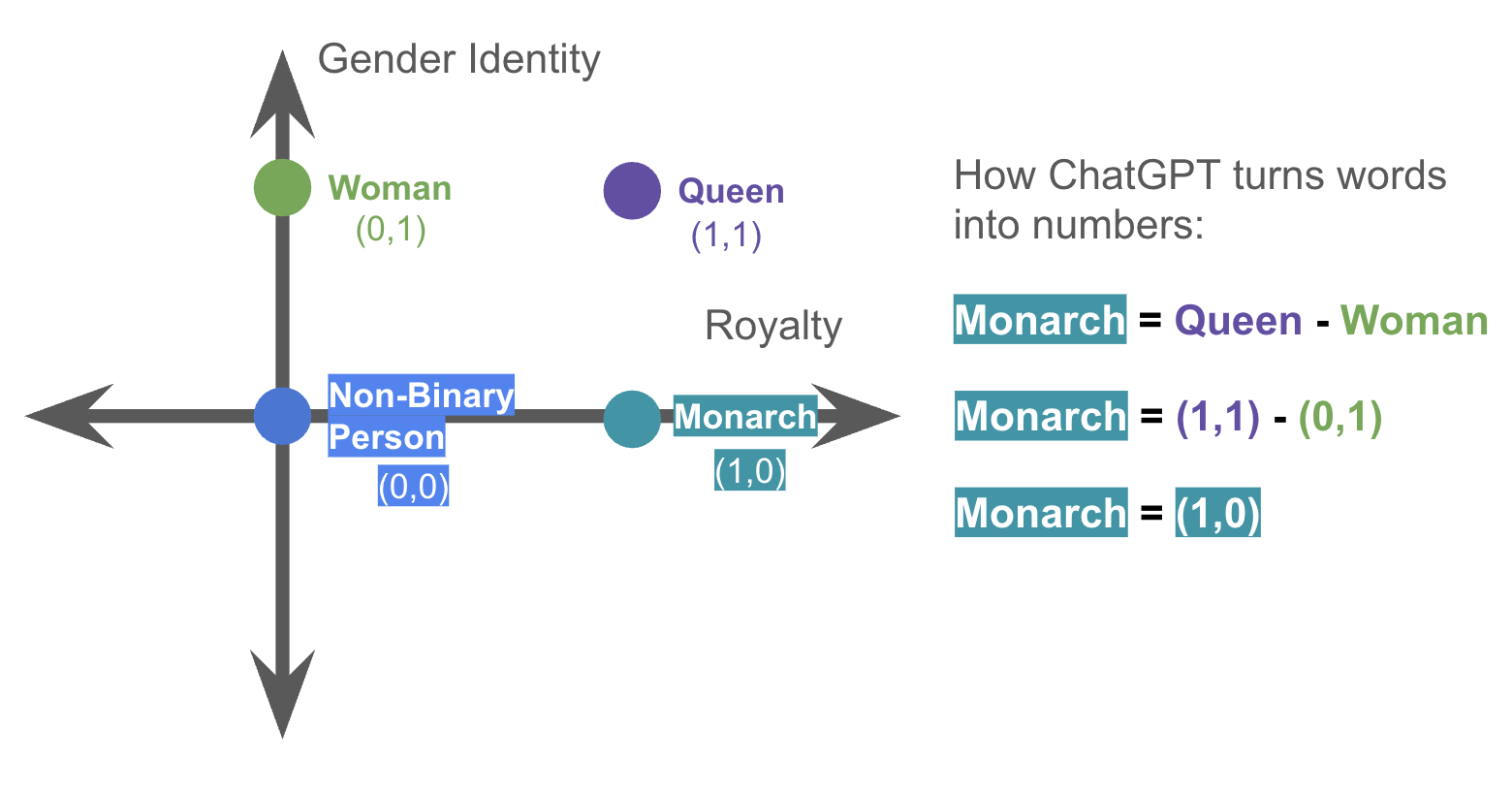
Here, we can see how we can perform math operations between word concepts in the way ChatGPT thinks. If we go by the coordinate pairs, we can calculate: Monarch = Queen - Woman.
So ChatGPT does all of this, but instead of pairs of numbers, it is able to perform these operations on lists of MILLIONS of numbers at a time. This is because there are so many more relationships between words outside of “Royalty” and “Gender Identity” or “Activity Intensity” and “Temperature”.
So instead of 2D space (with parabolas) or even 3D space (with paraboloids)...
We are working with functions in MILLION DIMENSIONAL SPACE!!!!
Remember when we talked about dropping marbles in bowls and shaking a little bit? ChatGPT does this while working in a dimensional space WE CAN’T EVEN COMPREHEND!! Long story short, ChatGPT’s outputs are based on sets of predictions that use information from relationships between words. Accuracy, comprehension, and output from these AI models can be thought of as a more complicated version of finding a local minimum, like the vertex of a parabola.
Reminder on our new terms: stochastic is a fancy word for random, and this concept is also referred to as “noise” or “temperature”. Temperature is more widely used in the context of language models like ChatGPT.
What do you think happens when we raise or lower the temperature of the output of ChatGPT? Yes, this is shaking a bowl in a million dimension space.
P.S.: What we talked about today is exactly why TikTok and Instagram Reels are so addicting and the Oxford Word of the Year is “Rage Bait”. The “marbles at the bottom of the bowl” for social media have to do with watch time, comments, and shares. Outrage and dishonesty is more effective at this than positivity and the full truth.
Thank you so much for listening and participating!!
About the Speaker (Griffin Rutherford)
I am a 24-year-old graduate of Santa Fe Prep and a Bachelor and Master of Science in Computer Science Graduate from Colorado School of Mines. People say I have "golden retriever energy", and I love being physically active. I am an avid weightlifter, trail cyclist, snowboarder, runner, and more. I moved back to Santa Fe to work a remote position as an AI Research Engineer. I was a member of the Alpha Tau Omega fraternity as Philanthropy Chair, and I lived in the frat house basement for two years (at the expense of my GPA). I also love to sing, write, and enjoy long conversations with friends and family.